


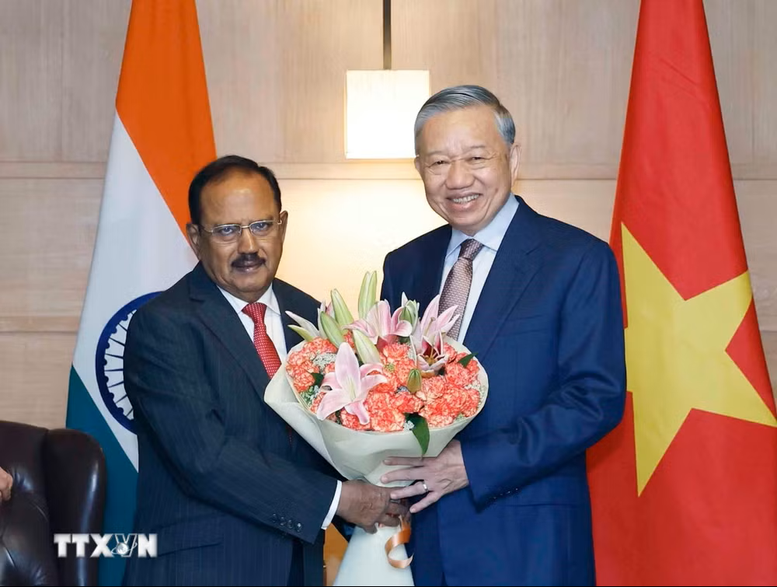
On the afternoon of May 5 in New Delhi, India, as part of his State Visit to the Republic of India, General Secretary of the Communist Party of Viet Nam Central Committee, President of the Socialist Republic of Viet Nam To Lam received India’s National Security Advisor Ajit Doval.
Warmly welcoming General Secretary and President To Lam back to India in his new capacity shortly after the 16th National Assembly completed the appointment of key State leadership positions, National Security Advisor Ajit Doval emphasized the special significance of the visit and affirmed that it marks an important milestone in further deepening the Comprehensive Strategic Partnership between the two countries, especially in key areas related to security and development.
Ajit Doval shared that although “instability” and “uncertainty” are the two most frequently used words to describe the current global situation, trust and the shared aspiration for development are what help stabilize the international environment. He expressed hope that the two countries would continue cooperating, developing together, and elevating bilateral relations to a new level.
Expressing admiration for Viet Nam’s comprehensive development achievements as well as its growing international role and standing, National Security Advisor Ajit Doval affirmed that India always regards Viet Nam as one of its most important partners in the region, making positive contributions to peace, stability, cooperation, and common development.
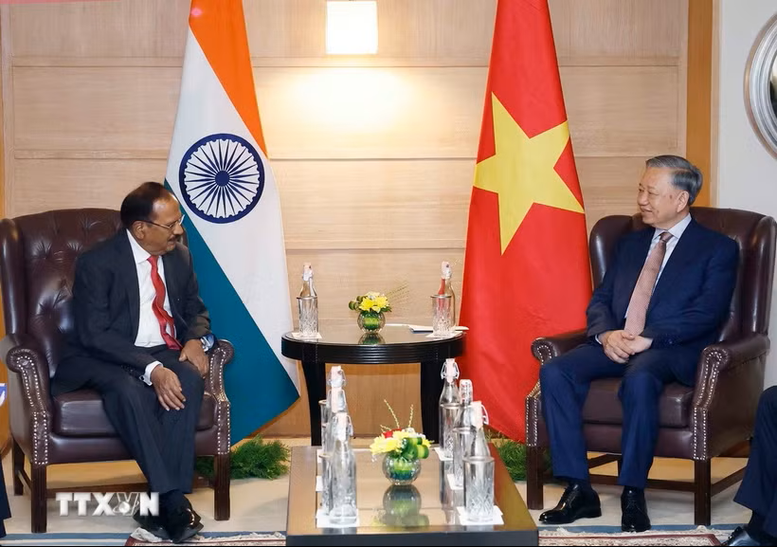
Both sides assessed that security cooperation is playing an increasingly important role in bilateral relations and emphasized the need to further deepen coordination among security, law enforcement, and policymaking agencies.
General Secretary, President To Lam emphasized that Viet Nam–India relations are built upon a solid foundation of political trust, shared strategic vision, and long-term development interests. He reaffirmed that Viet Nam consistently attaches importance to and wishes to further strengthen relations with India, while supporting India in playing an increasingly important role in regional and global mechanisms.
General Secretary, President To Lam noted that despite the many fluctuations in the global and regional situation, Viet Nam–India relations have remained strong and resilient, and that this visit itself demonstrates the traditional friendship and cooperation contributing to peace, stability, and development in the region and the world. He stated that with enormous potential, the two sides should promote substantive cooperation across all sectors, including economic cooperation, science and technology, digital transformation, emerging technologies, education and training, and people-to-people exchanges.
During the meeting, both sides assessed that security cooperation is playing an increasingly important role in bilateral ties and stressed the need to further deepen coordination among security agencies, law enforcement bodies, and policymaking institutions. General Secretary, President To Lam proposed that Viet Nam and India strengthen strategic information sharing, expand cooperation in cybersecurity, protection of digital infrastructure, prevention of high-tech crimes, and enhancement of capabilities to respond to non-traditional security challenges.
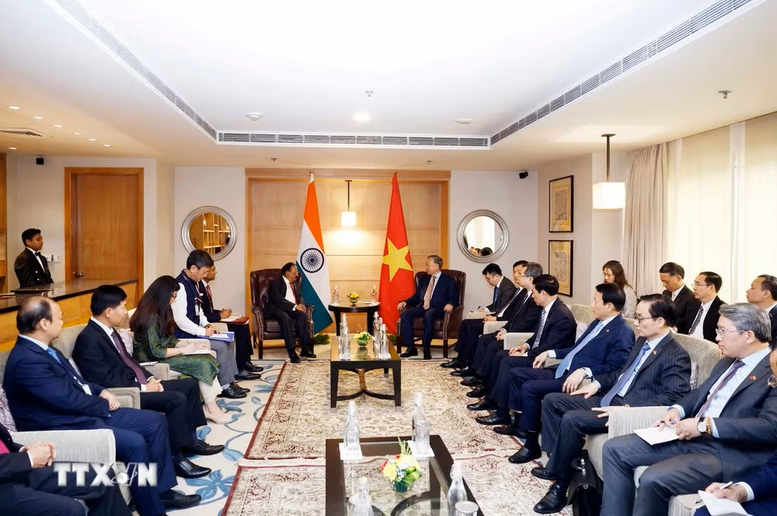
Both sides also agreed to continue strengthening strategic consultations and close coordination at regional and international forums.
On the basis of the Viet Nam–India Comprehensive Strategic Partnership, General Secretary, President To Lam and National Security Advisor Ajit Doval particularly emphasized the need for effective coordination in combating terrorism, transnational crime, online fraud, and emerging threats, thereby contributing to national security and social order in each country. The two sides also agreed to promote the linkage between security and development, and to expand cooperation in strategic technologies such as artificial intelligence, digital transformation, innovation, energy, and high-quality human resource training, considering these important foundations for enhancing each country’s strategic autonomy amid intensifying global technological competition.
Regarding regional and international issues, the two sides agreed on the importance of maintaining peace, stability, security, safety, and freedom of navigation and overflight, as well as resolving disputes through peaceful means in accordance with international law, particularly the 1982 United Nations Convention on the Law of the Sea (UNCLOS 1982). Both sides also agreed to continue strengthening strategic consultations and close coordination at regional and international forums, thereby contributing positively to shaping a stable, inclusive, and rules-based regional architecture amid a rapidly evolving and increasingly uncertain regional security environment.
At the conclusion of the meeting, both sides expressed confidence that, based on the traditional friendship, high level of strategic trust, strong political determination of the two countries’ leaders, and numerous shared perspectives, Viet Nam–India cooperation, especially in the field of security, will continue to develop in a deeper, more substantive, and more effective manner for the benefit of the peoples of both countries and for peace, stability, and sustainable development in the region and the world.
Source: Bao Chinh Phu Online; Photos: Vietnam News Agency (VNA)

Related Post